Martin Padgett

Journalist and historian

Menu

Skip to content
  • About
  • A Night at The Sweet Gum Head
  • The Many Passions of Michael Hardwick
  • Other Writing
    • People
      • Object Permanence (Gravy, Fall 2025)
      • Before TV, Leslie Jordan was Miss Baby Wipes
      • Underneath the Sweet Gum Tree (Oxford American, Summer 2020)
      • “Your Fried Chicken Has Done Drag” (Gravy, Spring 2020)
      • Wild horses, part one: The misfits
      • Wild horses, part two: Horses with no names
      • Wild horses, part three: The land of second chances
      • I work the line: What it’s like to assemble a 2019 Volvo S60
      • Catch my drift: Porsche’s Ice Force Pro driving school graduates snow PhDs
      • How I learned to love Formula 1 at the Miami Grand Prix
      • The Mazda Miata that found its way home: Time Machine Test Drive
    • Cars
      • What it’s like to win a new car during “The Price Is Right” Dream Car Week
      • How Motown, Martha and the Vandellas, and the Ford Mustang wrote music history
      • The Nine Cars You’ll Drive In Hell
      • The first electric-car president? Ike Eisenhower liked them
      • Recycling Your Car? Try Recycling a Whole Airport
      • Touring: Chasing the Targa Florio’s ghost in the Subaru WRX TR and BRZ tS
      • 15 Car Color Names That Are Just Keeping It Real (Or Are Maybe A Little Too Honest)
      • Spun off, spun out, spun and done: The 19 worst spin-off car models ever
      • Changing Car Names: Smudging The Past, Blurring The Future?
      • The 9 Cars (And Drivers) Guaranteed To Piss You Off
      • The Mercedes-Benz GLC Coupe is not a coupe, and neither are these other things either
    • Books
      • Separate (W.W. Norton, 2019)
  • The Queer Revolution Was Televised

The Queer Revolution Was Televised

How the Gay Rights Movement Liberated TV News
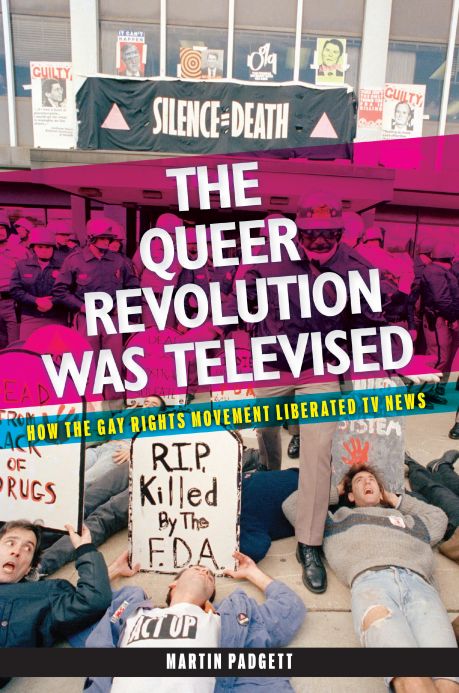
The 1980s were the decade in which the gay rights movement came to understand the narrative power of television, and how it could be usefully employed to advance its arguments in favor of empathy and equality. By broadcasting the emergence of the HIV/AIDS epidemic and the increased scrutiny of the legal and judicial system, the queer emotional community transformed a grassroots political movement into an agent of cultural change.

They built it, with no small amount of irony, along the lines of the assimilationist wing of the gay rights movement: we’re just like you, it was implied, when queer people placed themselves in the public eye to demonstrate their joys, their sorrows, their desires for a life constructed from the some of the same emotions as those of the predominant culture.

In the 1980s, gauged by some as the nadir of queer life in modern America, queer people created a distinguishable shift in the cultural conversation about their lives by performing it. Queer people had discovered a new tool by which they could telegraph an assuring sameness of their core desires—love, life, liberty—while correcting the negative and harmful stereotypes that had been broadcast about them.

The decade would still see old forms of discrimination ratified. HIV/AIDS became a new form of bondage. Video promised a new path toward freedom.

Coming March 9, 2027

Rutgers University Press

Like Loading...
Widgets

Twitter

My Tweets
Website Powered by WordPress.com.
  • Subscribe Subscribed
    • Martin Padgett
    • Already have a WordPress.com account? Log in now.
    • Martin Padgett
    • Subscribe Subscribed
    • Sign up
    • Log in
    • Copy shortlink
    • Report this content
    • View post in Reader
    • Manage subscriptions
    • Collapse this bar
 

Loading Comments...
 

    %d